What really happens to
your body when you stop making love
Rose Burke @RoseBurkee Carrie Madormo, RN, MPH
Intimacy and physical contact are things humans need to survive,
and yes that includes a little action between the sheets. Has it been a while
since you've done the deed? Maybe you and your partner have lost a bit of the
spark in your love life. Or maybe you're newly single or simply don't have the
time to date. It's also possible you're just focused on other things in your
life and don't feel like you're missing anything b not having sex.
Regardless of the reason behind the lack of lovemaking in your
life, if you've noticed any sudden changes in your mood or your body, it might
be about time to get back in the game. It turns out not having sex can actually
cause some changes in your body and, sure, some of the changes you experience
might be pretty pleasant, but we can tell you for certain that the vast
majority of them aren't. Here's what you can probably expect to happen if
making love has taken a backseat in your life.
You might have a wet dream or two

Like an over-hormonal teenage boy, women who aren't having sex
regularly may find that their body will remind them what they're missing in
their sleep. That's right, we're talking about what
teenage boys might call a wet dream. This is especially likely to happen if
your sex life is not only at a standstill, but you've also given up on
masturbating.
Researchers had it easy when they were studying nocturnal
emissions in men, the most obvious reason being because men have erections that
are visible and ejaculate as proof that they've climaxed. With women, studying
these night time bouts of arousal was more complex.
For researchers to collect data on female arousal
during their sleep, they had to measure heart rate, do brain scans, and watch
for temperature jumps near the clitoris. While it wasn't easy, they managed to
get it done and later revealed in a study reported by Broadly that
37 percent of women will have a wet dream before the age of 45 and that they're
most common in women between the ages of 40 and 50. So, if it's been a while
since you've gotten lucky, you can expect these little presents to find their
way into your subconscious.
Your stress levels go through the roof

According to Psychology Today, the endorphins released
during sex are ideal for leaving your worries behind and putting an instant
smile on your face. So when you've gone a while without any nookie,
you might notice that your stress level builds up.
If you're not one to get off as often as you'd like, have no
fear! It's not only those endorphins that help reduce stress levels,
it's those acrobatic moves we try in the bedroom as well. Sex can be a form of
exercise, which we all know fights off stress and anxiety, so if you aren't
getting any these days, try not to skip your cardio workouts.
If it wasn't bad enough that without sex you're feeling
overstressed, you might also have high blood pressure. One study determined that those who had sex over a
two week period had significantly lower blood pressure levels than those who
were without sex or even compared those who masturbated or participated in
sexual activities that excluded intercourse. So even taking
care of things yourself or making out a bit won't help your stress levels very
much. In this case, women actually do need a partner.
Your immune system suffers
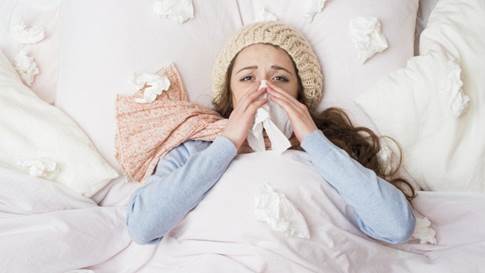
Seems like having sex provides some key benefits to our health,
but when we're not rolling around in the sheets with our partner, we actually
more susceptible to illness too. According to the Mayo Clinic, the DHEA, or Dehydroepiandrosterone, hormone is released during arousal,
with even more released when you orgasm. This hormone gives your
immune system a bit of a boost, helping your body to fight against bacteria,
viruses, and other pretty nasty germs.
While not having sex certainly doesn't mean you're going to come
down with some major illness, you'll be missing out on some of these other
great benefits as well. The DHEA hormone is also said to act as an antidepressant, make your skin look
great, help repair any damaged skin tissue faster, and even increase
apprehension and learning abilities.
A study of college students also found higher
levels of immunoglobulin A, an antibody that is important for immune function,
in those who had sex at least once or twice a week when compared to those who
didn't. So, no sex means no antibody to fight off that
flu!
You feel depressed

Apparently semen is the new antidepressant. That sounds like
something a guy would say to get a girl in bed, but it's true! Psychology Today reported on a study
in which 293 SUNY Albany female students were surveyed on their sex habits,
such as frequency and whether or not they used a condom. They then gave the
same women the Beck Depression Inventory to determine their moods and level of
depression.
It turns out that those who were having sex without a condom
were significantly less depressed than those who were using condoms or not
having sex at all. When the mood elevating compounds found in semen are
absorbed by the vaginal walls, they can literally cheer a woman up. Who knew?!
A break in sexual intercourse is also often due to a breakup,
which can cause depression on its own. Dr.
Lauren Streicher, author of Sex
Rx: Hormones, Health, and Your Best Sex Ever explains, "You might
be depressed because your boyfriend cheated on you and your life is in the
toilet, but the specific lack of sexual activity is in no way going to cause
[clinical] depression, even though there's a high correlation."
You lose your sex drive

While "use it or lose it" may be true here, women
don't actually lose anything they can't get back, at least while we're still in
our baby-making years. According to an article in Prevention, when
your body stops having the feelings associated with orgasms, it simply adjusts
to not being given those feelings and stops seeking them out.
If you aren't too keen on losing your sex drive for even a short
period of time, masturbation should do the trick. Sex therapist Holly
Richmond, who has a PhD in Somatic Psychology even said,
"People who are comfortable masturbating tend to be more thoughtful and
giving lovers," so don't be shy!
Feel grateful you're a woman in this regard, as men
actually can lose it if they don't use it. Like any other
muscle in the body, studies have shown that when a man
doesn't exercise his "Johnson" for an extended period of time, he's
more likely to develop erectile dysfunction because sex helps to protect blood
vessels and nerve fibers that are necessary for men to have an erection.
Your vaginal walls weaken

It seems that over the age of 50 or so, women risk not feeling
any pleasure during sex if they don't have intercourse regularly. Typically,
the vaginal walls will get thin and weaken to the point of tearing while
entering menopause, making sex extremely painful. The best way to prevent this
from happening is to keep doing the nasty well into retirement. Dr. Streicher told Reader's
Digestthat
thinning of the vaginal walls is due to lack of blood flow, which can be
increased by sexual arousal and penetration.
"Older women who are not having intercourse are more likely
to have thinning and drying of the tissues," she said. "A big part of
this is blood flow, and we know increased activity increases blood flow."
If painful sex isn't bad enough, a side effect of the weakening
of a woman's vaginal walls is difficulty creating natural lubricant, making sex
after a long dry spell not only painful but frustratingly dry. In this case,
doctors have said if you don't use it then you will lose it,
so end your dry spell and hop in bed with your partner ASAP! You're never too
old to get your freak on.
Your risk of getting a UTI decreases
Urinary tract infections are no joke. They're painful, frustrating,
and seemingly never-ending. Have you ever noticed that nearly every time you've
gotten an infection it was right after having sex? That's because research has
shown that 80 percent of UTIs form within 24 hours of sexual intercourse,
according to The New York Times. Most commonly, women
will get an infection when having sex for the first time after a long period of
time without getting it on. Even two or three weeks can be considered a long
time, so even being away from a partner for a bit can leave women at risk for a
UTI.
Likely the only positive thing that comes out of a long dry
spell is the fact that you're pretty much in the clear when it comes to getting
this nasty infection, but once you start being active in the bedroom again,
you're almost guaranteed to get one. Seems like it might be a
double edged sword.
You gain weight
You might not realize just how many calories you're burning in
between the sheets, but you might notice after the sex has stopped. According
to Woman's Day, light
kissing only burns about 68 calories per hour, but you can burn around 476
calories making out in the same amount of time. Apparently the anticipation of
these kisses leading to more than just heavy petting causes us to breathe
heavier, resulting in more calories burned!
Giving your partner a sensual massage is not only great for
setting the mood, but will help you burn 80 calories in just an hour. When
foreplay starts to get frisky, hand stuff will burn about 100 calories in an
hour, but giving oral will burn twice as much at about 200 calories. Sex itself
will burn at least 144 calories in a half hour, but that's if you're pretty
lazy and letting your guy or gal do all the work. Changing positions, taking
control on top, and even moaning every now and then will burn significantly
more.
That's about 1,200 calories a week you could be burning if you
had sex three or four times, which is lot of extra calories you're no longer
burning if you give up doing the dirty! So if you go from having regular sex to
none, then you may notice that you've gained a few extra pounds.
Your brain turns to mush

Memory loss and absent mindedness are huge side effects of going
without sex. Sex boosts the functionality
of the hippocampus, which is a small part of the brain that helps with your
long-term memory. During sex, new neurons are produced by this area of the
brain, which significantly help you with your memory problems, according
to at least one study. When the sex stops for
an extended period of time, this boost in your memory and cognitive functions
disappear.
Before you start thinking that having daily sex will give you a
photographic memory, understand that the hippocampus isn't responsible for your
entire memory bank. An article published in Broadly reported on a study in which 78 women were asked to analyze
abstract words as well as neutral faces.
The study found that women who had regular sex were able to
remember the words better than those who weren't having sex, but neither group
was able to remember the faces well because memory of images rely on a
different area of the brain. This was only found to occur in women, not men,
and can explain why women who just get out of a relationship and aren't having
sex can seem a little absent-minded.
You won't contract an STI…
most likely

We've all had our scares and found ourselves sitting in a health
clinic, admitting to a stranger in a lab coat how many partners we've had over
the years and listing all the symptoms we're experiencing that have convinced
us we're infected. Usually it's just a yeast infection or the result of some
seriously tight jeans, but not having sex means you no longer have to worry —
about most STIs at least.
While abstaining from sex is the only way to be sure you won't
get HIV, many people don't know that you can contract by some infections
through practically any form of sexual contact. That's right,
you can get herpes from simply making out with someone.
The Huffington Post makes a hilarious,
but true, statement about getting a sexually transmitted infection without
having sex saying, "Even grandma kissing you at Christmas might pass on
cold sores (a herpes virus)." So, while you can certainly worry less about
STIs when you're not having sex, that doesn't necessarily mean you don't have
to worry about them at all.
You may doubt your relationship

When you are in a relationship and the sex starts to dwindle,
you may be left feeling insecure and distant. Studies have shown that married
couples who do not have regular sex have higher divorce rates. A study in
the Journal of Marriage and Family found
that even unmarried couples are at risk. Couples who live together who stop
having sex are also more at risk for breaking up. While it's hard to say
whether relationship problems cause a drop in sexual activity or if less action
in the bedroom leads to relationship problems, they're certainly related.
"Going without sex in a marriage can deliver a hit to your
self-esteem, engender guilt, and decrease levels of oxytocin and other bonding
hormones," Psychologist Les Parrott told Prevention. "It can also
increase fears that one of you will look to others for your sexual needs, which
can breed a little paranoia." If the sex department has been lacking in
your relationship, talk to your partner before it takes on a life of its own.
Your workouts won't be as effective

It turns out that a great night with your partner could also
lead to a great workout the next morning. This is because the hormones released
during sex help with pain tolerance, motivation, and improved sleep. During an
orgasm, the hormone dopamine is released, and
this little friend makes you feel good and helps get you up and moving. That
means you'll be more likely to get up and get to your workout and you might
even be able to push through a bit more discomfort on the treadmill than usual.
If you suddenly lose that fun source of dopamine in the bedroom, your workout
motivation may go down as well.
Supermodel Miranda Kerr once confessed that she wasn't as toned
after going through her divorce, because she was no longer having sex.
"One thing I've noticed is now that I'm having less sex my body isn't as
toned," she told Women's Health.
"The more sex I have, the more defined my arms and stomach get." Hey,
if it can happen to a Victoria's Secret model, it can happen to anyone!
You'll tap into your partner's feelings

One of the things that physical intimacy does for us is open us
up to other forms as intimacy as well. That's part of why when we think of a
relationship without sex, we can't help but think those two individuals must be
distant in other ways as well. Not having sex is a symptom of a serious
relationship problem, right? While a lack of intimacy might indicate an issue
in some relationships, it's sometimes par for the course after having a baby.
What's more, not having sex might even help new parents tap into their
partner's feelings a bit more.
A study in the Journal of Sexual Medicine found that
postpartum women who had not resumed sex yet were actually more concerned with
their partner's needs and feelings about sex than their own. The new mothers
reported focusing more on their partner's desire and fatigue levels, and that
was the biggest predictor of when they would feel ready to resume sex.
You'll learn new coping skills

There's a silver lining to be found in most situations, and that
apparently includes what happens to you when you stop having sex for a while.
We've noted how making love can keep our stress levels in check, so you'd think
that not having that intimacy and stress-buster in your life would leave you completely
at a loss. It turns out, however, that if you aren't having the sex that you
crave, it forces you to cope with that stress and learn new ways to do so.
A study in the Journal of Marriage and Family found
that when individuals who wanted sex found themselves in a celibate
relationship, they learned new coping skills to keep themselves going. They
also remained hopeful that sex would return, keeping them feeling positive. So
look on the bright side. At least you're growing as a person!
The study didn't address people who are single and therefore not
seeing any action, but like those in celibate relationships, let's stay
hopeful.